What Is Scrum? The Framework That Runs on Sprints
Scrum gets a bad rap because it's usually explained with a slide full of boxes and arrows that makes your eyes glaze over. Let me skip the boxes and tell you what it actually is — the way I'd explain it to a new teammate on day one.
The short version
Scrum is a framework for getting work done in small, repeatable chunks called sprints. You don't plan six months of work up front and pray. Instead you plan a couple of weeks, build, show people, learn, and do it again. The team decides what to build; the process gives it a steady rhythm.
It's not a methodology, and it's not a set of rules to follow blindly. It's more like a container — you put your own practices inside it.
Why it's called "Scrum"
Borrowed from rugby. In rugby, a "scrum" is when the whole team packs together to move the ball forward — everyone pushing in the same direction, nobody standing on the sidelines watching. The people who created Scrum in the early 90s liked that image, and honestly it's a perfect metaphor for a good team: heads down together, moving the thing forward.
The three pillars (the part people skip)
Underneath all the ceremonies there are three ideas that make Scrum work, and if these aren't there, the meetings are just meetings:
- Transparency — everyone can see what's being worked on, what's done, what's stuck. No hidden work, no surprises.
- Inspection — the team regularly looks at what it built and how it's working, not just at the end of the project.
- Adaptation — and then actually changes course based on what it saw. This is the part most teams skip. Inspecting without adapting is just complaining.
The pieces: roles, artifacts, events
Scrum has three roles, three artifacts, and five events. It sounds like a lot, but it's really just "who does what," "what we track," and "the meetings."
Roles — the Product Owner (decides what's most valuable and keeps the backlog sorted), the Scrum Master (helps the team run Scrum well and removes blockers — not a boss), and the Developers (the people who actually build the thing). That's it. No project managers in the classic framework.
Artifacts — the Product Backlog (the ever-growing list of everything we might build, prioritised), the Sprint Backlog (what we committed to this sprint), and the Increment (the working, usable result at the end).
Events — Sprint Planning (pick what we'll do), the Daily Standup (15 minutes, sync up), the Sprint Review (show the work to stakeholders), and the Retrospective (how did the process go — what do we change). Then the sprint ends and a new one starts.
A sprint, start to finish
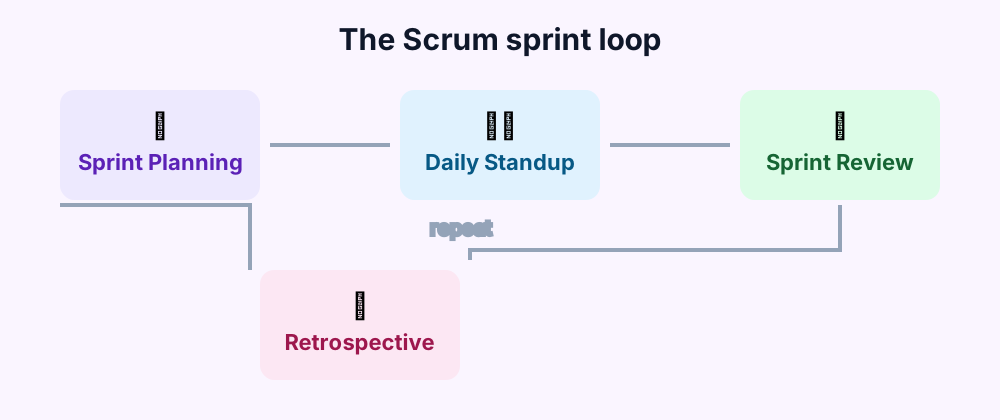
Here's what a typical two-week sprint feels like:
- Monday morning: Sprint planning. The team pulls the next chunk of work off the backlog, agrees on what's realistic, and commits.
- Every day: 15-minute standup. What did I do, what will I do, what's blocking me. Then everyone goes and works.
- End of week two: Sprint review — show a human what we actually built, even if it's rough. Then retrospective — talk about the process, pick one thing to improve.
- Then: do it again. Same length, same rhythm, forever.
The magic isn't in any single meeting. It's the repetition. The team gets a reliable heartbeat, stakeholders get to course-correct every couple of weeks, and no one has to wait six months for feedback.
Quick answers
Is Scrum Agile? Yes — Scrum is one framework you can use to do Agile. Kanban is another. Agile is the umbrella mindset; Scrum is a specific way of running it.
Do we have to do all the meetings? The framework says yes, but good teams tune it. The meetings are there to serve the pillars — if a meeting isn't helping transparency or adaptation, change it.
Is Scrum for software only? No, it started there but marketing teams, HR teams and even law firms run Scrum these days. If work is complex and uncertain, the framework helps.
Tip: Sprints run on calendars — and if your team is distributed, make sure your sprint ceremonies land in everyone's working hours. A quick ClockHive check of your team's cities before setting the recurring invites saves a lot of groggy 11 PM standups.
Helping remote teams and global professionals master time zones. We build tools that make distributed work effortless.
🌍 Never miss a timezone tip
Get the latest guides on remote work, timezone management, and global team productivity.
Create Free Account